

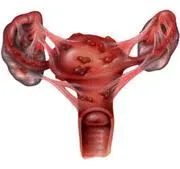
Endometriosis is defined as the growth of endometrial tissue outside the uterine cavity, mainly in the lesser pelvis, on the ovaries, the uterine ligaments, the appendix, the intestine, the bladder, the cervix, and also on the wall of the peritoneal cavity.
Endometriosis foci have also been described on the umbilicus, in the scar of laparotomy and perineotomy incisions, in the vagina and also in more distant areas such as the chest and pericardial cavity.
Causes of endometriosis
The mechanism by which endometriosis develops is unknown. Various theories have been proposed for its causative origin, but as things stand, the most widely accepted is that of direct implantation of endometrial cells in the lesser pelvis, through retrograde flow of menstrual blood via the fallopian tubes. However, retrograde menstruation occurs in most women, and clearly not all of them develop endometriosis. For this reason, research has turned to the hypothesis that women who develop endometriosis have a reduced immune response, with the result that endometrial cells located outside the uterus are not destroyed.
Symptoms of endometriosis
Endometriosis most often affects women aged 20-45, and the clinical symptoms depend on the location and extent of the disease. The classic triad of symptoms is dysmenorrhoea, i.e. pain shortly before and during the period (which is not present from the onset of menstruation), dyspareunia, i.e. pain during sexual intercourse, and finally infertility, which is found in women with endometriosis at rates of 25-35%.
Diagnosis of endometriosis
Certain elements of the medical history, such as the onset of dysmenorrhoea (pain during the period) after the age of 20, pain radiating to the lower back or rectum, and relief after hormone treatment (contraceptive pills), are of significant help. Bimanual gynaecological examination also assists the clinician. Transvaginal ultrasound can detect cystic masses of the ovaries, which suggest endometriomas. However, the definitive diagnosis is made by laparoscopy, a simple surgical procedure for inspecting the abdominal cavity, using an optical camera that passes through the abdominal walls via a very small incision in the area of the umbilicus.
Treatment of endometriosis
Treatment may be medical, surgical or a combination of the two. Initially the diagnosis must be established and the extent of the disease determined. The type of treatment will then be decided, depending on the patient's age, the extent of the disease and her wish to have children. Medical treatment is applied to patients without extensive foci and adhesions who wish to become pregnant, as well as to women without fertility problems. Surgical treatment is usually laparoscopic and aims to remove or cauterise the visible foci, release the adhesions and ultimately restore normal anatomical relationships. Laparoscopy here has the advantages of direct visualisation of the peritoneal cavity under adequate magnification, quick surgery, and rapid recovery and discharge from hospital.